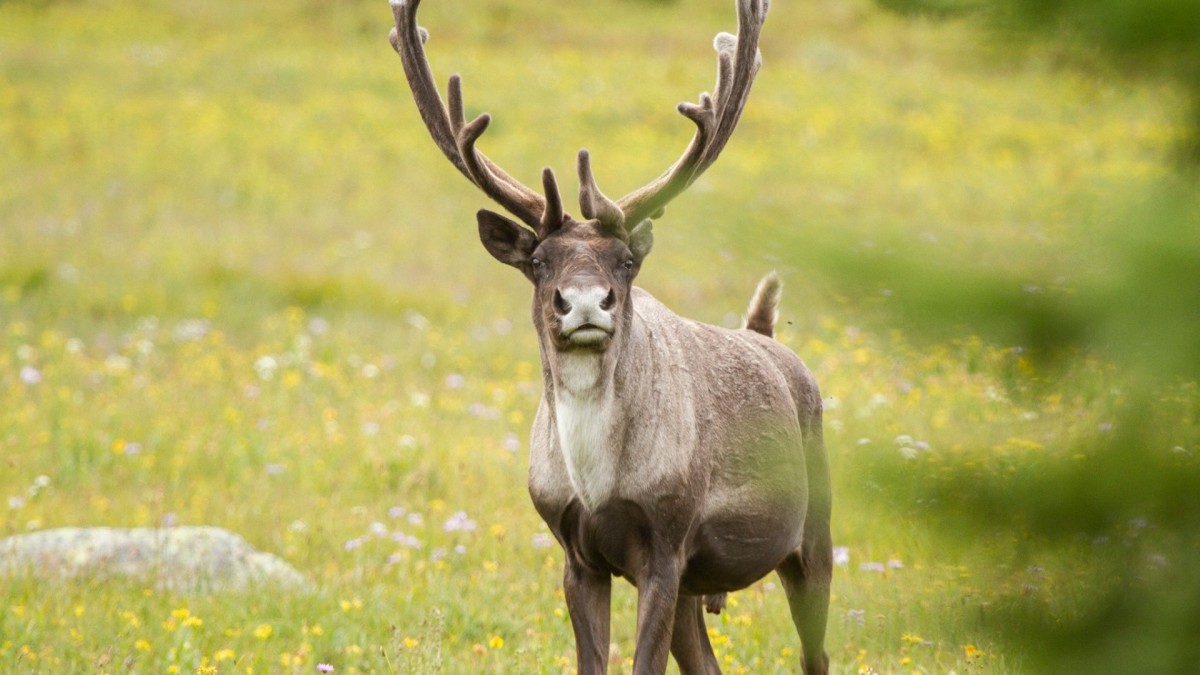
Today, only one third of the Columbia North herd’s core habitat is protected, despite the federal recovery plan recommending that all of the herd’s core habitat be protected.
B.C.’s southern mountain caribou depend on mature and old-growth cedar, hemlock, and subalpine fir forests, for several reasons. In winter, when other food is buried, they stand with huge snowshoe-like feet on top of the snow to feed on lichens growing on the branches of old-growth trees, as well as falsebox, an evergreen shrub — hence why they are sometimes called ‘deep-snow caribou’. Herds spend parts of the year in low-elevation old-growth stands and migrate to higher subalpine elevations in warmer months. under Canada's Species at Risk Act (SARA), Mountain Caribou herds are listed as threatened.
So what’s the threat? Despite the perilous state of our remaining southern mountain caribou herds, logging continues to occur in critical southern mountain caribou habitat. In 2014, the federal government released its southern mountain caribou recovery strategy, which recommended limiting disturbance to critical caribou habitat. In the five years after the strategy was released, more than 90,900 hectares — an area equivalent to over 227 times the size of Vancouver’s Stanley Park — of critical caribou habitat was logged in B.C.
It is ours to treasure, ours to protect. Help us stand up for caribou in Canada’s highest court, and in the ancient forests that are vital to their survival.
What is Wildsight doing?
Wildsight has advocated for increased caribou protections for more than 30 years. Currently, we’re pushing for habitat protections for the last two remaining herds in the region: the Columbia North and Central Selkirk herds. We also work alongside First Nations and other organizations to defend southern mountain caribou from a variety of threats. |